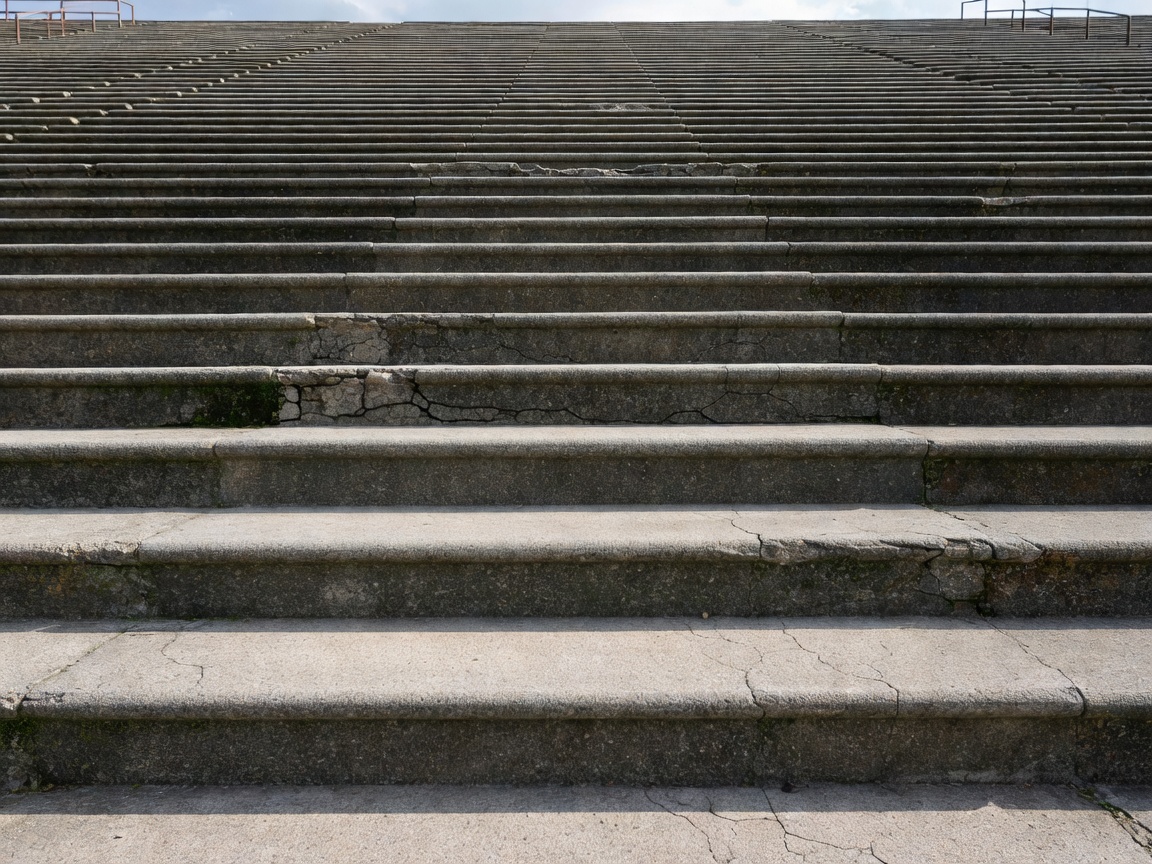
The genesis of organised football support cannot be traced to a single moment or a solitary location. Rather, it emerged as a spontaneous, decentralised response to the social environments of mid-20th-century urban centres. As industrialisation and post-war restructuring shifted the demographics of working-class neighbourhoods, the football stadium became a crucible for communal identity and collective expression.
The Emergence of Torcida
One of the earliest documented formations of organised support occurred in Yugoslavia. In 1950, a group of Hajduk Split supporters established Torcida Split. Inspired by the passionate, rhythmic backing they had witnessed from Brazilian fans at the World Cup, they sought to formalise their devotion. Torcida introduced coordinated chants, flags, and an unprecedented level of vocal backing that contrasted sharply with the traditional, reactive spectator experience. This marked a profound shift: fans were no longer merely watching a spectacle; they were actively participating in its production.
The Italian Phenomenon
By the late 1960s, a distinct movement was crystallising in Italy. The formation of the Fossa dei Leoni by AC Milan supporters in 1968 is widely regarded as the birth of the ultra movement. Emerging during Italy's 'Years of Lead', a period of intense social and political upheaval, these groups mirrored the structure of contemporary political street movements. The Curva Sud and Curva Nord in stadiums like the San Siro and the Stadio Olimpico (home to Roma and Lazio) became strictly territorial domains. They possessed their own hierarchies, financing mechanisms, and visual languages.
In Italy, the support was highly choreographic. The introduction of megaphones, drums, and massive, hand-painted banners transformed the stadium into an arena of intense sensory overload. The 'tifo'—a vast, coordinated visual display—became a central component of matchday, requiring weeks of clandestine preparation and significant financial pooling.
The British Ends and South American Barra Bravas
Simultaneously, a parallel evolution was occurring in the United Kingdom and South America. In England, the traditional 'ends'—such as The Kop at Anfield—became synonymous with fierce, vocal loyalty. By the 1970s, the UK saw the rise of the casual subculture, deeply intertwined with fashion, music, and territorial rivalries. The aesthetic was markedly different from the Italian ultras: eschewing club colours for high-end sportswear, yet the underlying current of intense tribal loyalty was identical.
In South America, the Barra Bravas developed, particularly prominent in Argentina with groups like La Doce of Boca Juniors. The Barra Bravas integrated deeply into the structural and political fabric of their clubs, often wielding significant influence over club elections and matchday economics. The rhythmic, percussion-heavy backing of the Barras created an atmosphere of relentless intensity.
A Global Synthesis
Today, terrace culture is heavily globalised. A group like the Green Brigade at Celtic or the Yellow Wall (Südtribüne) of Borussia Dortmund borrows elements from Italian choreography, South American rhythm, and British vocal intensity. Despite this synthesis, the core motivation remains rooted in the origins: the desire for agency, the assertion of hyper-local identity, and the everyday labour required to belong to a collective larger than oneself.